
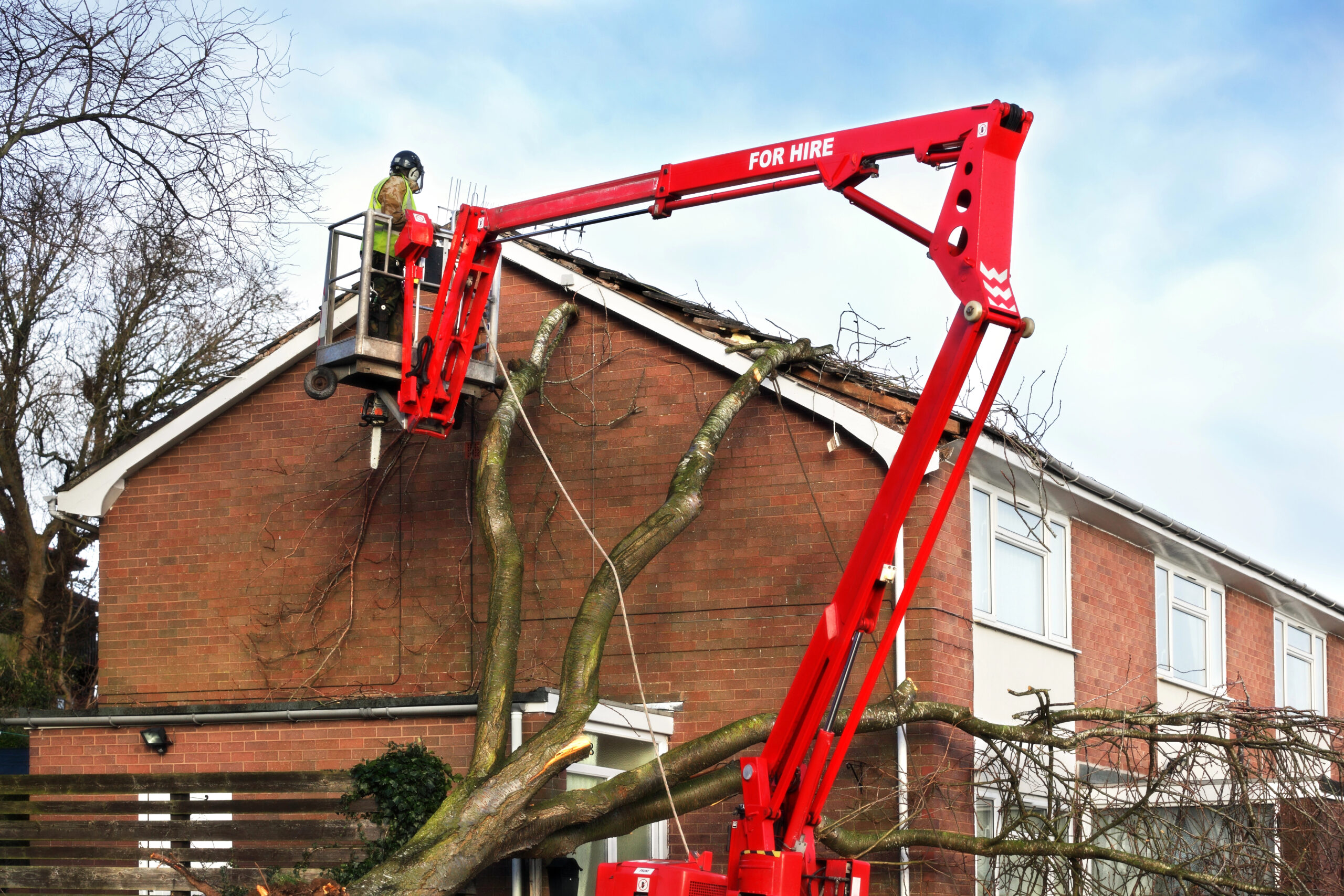
A major weather event can upend everything in a matter of hours. If you’re reading this after a storm, you may be dealing with a damaged roof, water inside your home, broken windows, or worse, and trying to figure out where to start. That’s a hard place to be.
This guide is meant to help. The steps below are organized the way the recovery process actually works, so you can move forward with clarity rather than just react.
Step One: Make Sure It’s Safe to Be There
Before anything else — before you assess damage, before you take photos, before you make a single call — confirm the structure is safe to enter.
Look for obvious signs of compromise: sagging rooflines, cracked or shifted foundations, tilting walls. Any of these indicate potential collapse risk and mean you should stay out and contact a professional before re-entering.
Walk the perimeter and check for downed power lines and anything that might be energized. If you smell gas or hear hissing near gas lines, leave immediately and call your gas company from a safe distance. These aren’t steps to rush through; they’re the ones that matter most.
Step Two: Document the Damage Before You Touch Anything
Once you’ve confirmed it’s safe, your next priority is documentation, and it needs to happen before any cleanup begins.
Take wide-angle photos showing the full scope of each affected room, then close-up shots of specific damage. Video walkthroughs provide context that still photos can’t capture. Include reference points — a ruler, a coin, a hand — when photographing smaller damage so the scale is clear in the images.
Work through the exterior first: roof, siding, windows, foundation. Then move inside: ceiling stains, wall cracks, flooring damage, and any areas where water has intruded. Pay close attention to junctions where different building materials meet. These spots often reveal hidden damage that isn’t immediately visible.
This documentation is the foundation of your insurance claim. Don’t skip it, and don’t start cleaning before it’s complete.
Step Three: Contact Your Insurance Company
Report your claim within 24 hours of discovering damage. Major weather events generate a high volume of claims simultaneously, so early reporting helps ensure faster adjuster assignment and claim processing.
When you call, be specific: what happened, when it occurred, and what damage you can see. Ask about your deductible, your coverage limits, and what emergency protective measures your policy covers — board-up, tarping, water extraction, and temporary housing costs are often covered but need to be pre-approved or, at a minimum, documented.
Keep every receipt from this point forward. Emergency services, temporary repairs, and hotel stays if your home is uninhabitable. All of it is potentially reimbursable with proper documentation.
Step Four: Stop Further Damage From Happening
Your insurance policy requires you to take reasonable steps to prevent additional damage after a weather event. This is called your mitigation obligation, and it begins as soon as conditions allow.
Broken windows and roof openings need to be boarded up or tarped. Any standing water needs to be extracted. Water that sits in a structure for more than 24 to 48 hours saturates building materials and creates conditions for mold growth — damage that multiplies the longer it’s left alone.
For temporary measures, focus on security and weather protection. Adjusters need to see original damage before full restoration begins, so temporary repairs are appropriate here, not permanent fixes. Document everything you do, including photos before and after each protective measure.
If the water intrusion is significant, professional extraction is the right call. Industrial-grade pumps and dehumidifiers remove moisture at a rate household equipment simply can’t match, and reaching moisture inside walls and subfloors requires specialized equipment you won’t find at a hardware store.
Step Five: Work with a Restoration Company That Handles the Full Recovery
Not all restoration companies are built the same way. Some handle emergency services and initial cleanup, then step back, leaving you to coordinate reconstruction, insurance follow-up, and contractor scheduling on your own.
Insurcomm’s approach is different. From the first call through final reconstruction, one team manages the entire recovery. That means emergency response, structural drying, contents protection, and complete rebuilding — coordinated with your insurance carrier throughout — without you having to manage the handoffs between phases.
When you’re already dealing with the disruption of a major weather event, having a single point of contact for your entire recovery isn’t just convenient. It’s the kind of support that makes a real difference.
Understanding the Full Recovery Timeline
It helps to know what’s ahead. Storm damage recovery typically moves through several phases: emergency stabilization, damage assessment, structural drying and mitigation, restoration and reconstruction, and final inspection. Each phase builds on the one before it.
Hidden damage is common after major weather events — moisture behind walls, compromised insulation, structural movement that isn’t immediately visible. Professional assessment using thermal imaging and moisture meters finds damage that a visual inspection will miss, preventing problems from surfacing weeks or months later when they’re significantly more expensive to address.
When everything goes wrong, Insurcomm’s team is dedicated to making sure everything goes right.
Your Next Step
You don’t have to figure this out alone. Insurcomm’s 24/7 emergency response team is ready to help from the first assessment through complete restoration.
Call (800) 503-9533 for immediate assistance after storm damage. The sooner the process starts, the better the outcome.