
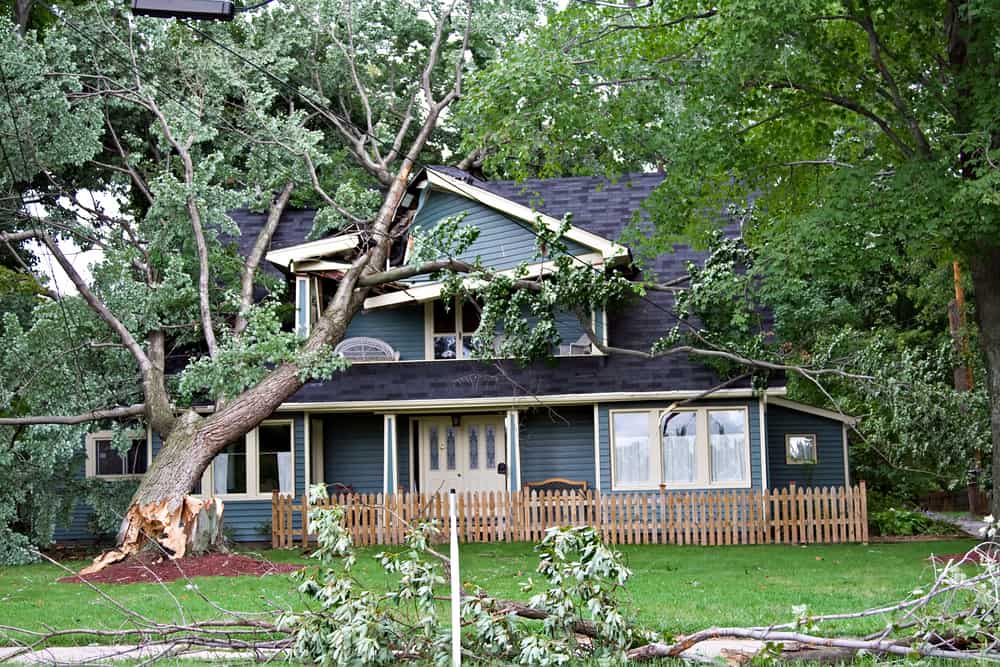
When severe weather strikes your property, the aftermath often brings a confusing question: Was this storm damage or wind damage? While the two terms sound interchangeable, your homeowners insurance policy may treat them very differently. Understanding the distinction and how it affects your coverage can mean the difference between a smooth claim and a frustrating denial. This guide breaks down what separates storm damage from wind damage, what your homeowners policy typically covers, and how proper insurance coordination during wind damage restoration protects your investment.
Understanding Storm Damage vs. Wind Damage
The terms “storm damage” and “wind damage” describe related but distinct types of property loss, and insurance carriers parse these definitions carefully.
Wind damage refers specifically to harm caused by the force of wind itself. This includes shingles torn from your roof, siding ripped away, fallen trees, broken windows, and structural stress from high gusts. Wind damage is one of the most common claims under a standard homeowners policy.
Storm damage is a broader category that encompasses the combined effects of a severe weather event. This can include wind, but also hail, lightning, heavy rain, and the water intrusion that follows. A single storm might produce wind damage to your roof and water damage to your interior—two issues that may fall under different parts of your home insurance coverage.
The distinction matters because how the damage is classified often determines which coverage applies, what your deductible will be, and whether the claim is approved.
What Your Homeowners Insurance Typically Covers
Most standard homeowners policies cover both wind and storm damage caused by sudden, accidental events. However, the details vary significantly between carriers and regions.
Wind Damage Coverage
Wind damage is generally covered under the dwelling and personal property portions of a homeowners policy. If a windstorm tears shingles from your roof or topples a tree onto your garage, your policy will typically pay for repairs after your deductible.
Keep in mind that some policies in high-risk regions carry a separate windstorm or hurricane deductible, which is often calculated as a percentage of your home’s insured value rather than a flat dollar amount.
Storm Damage Coverage
Storm damage caused by covered perils—lightning, hail, and wind-driven rain entering through a storm-created opening—is usually covered. However, there’s an important exception: flooding.
If rising water from a storm enters your home from the ground up, standard home insurance will not cover it. Damage caused by flooding requires a separate flood insurance policy through the National Flood Insurance Program or a private insurer.
Common Coverage Gaps
Homeowners are frequently surprised by these exclusions:
- Gradual wear and tear on roofing materials is not covered, even if wind exposes the problem.
- Maintenance-related issues, such as a roof that was already deteriorating, may lead to a denial.
- Flood damage requires separate coverage, as noted above.
- Earth movement triggered by storms may be excluded.
Reviewing your homeowners policy before a storm hits—not after—helps you understand exactly where you stand.
How to Coordinate Insurance During Wind Damage Restoration
Proper coordination between you, your restoration team, and your insurance carrier is the key to a successful claim. Here’s how to navigate the process effectively.
Document Everything Immediately
Before any cleanup begins, photograph and video the full extent of the damage. Capture wide shots and close-ups of damaged roofing, siding, windows, and any interior water intrusion. This visual evidence becomes critical when distinguishing wind damage from storm-related water damage during your claim.
Notify Your Insurance Carrier Promptly
Contact your insurance company as soon as it’s safe to do so. Most policies require prompt notification, and delays can complicate or jeopardize your claim. Provide clear details about when the storm occurred and what damage you’ve observed.
Prevent Further Damage
Your policy obligates you to take reasonable steps to prevent additional loss. Tarping a damaged roof or boarding broken windows protects your property and demonstrates good faith to your adjuster. Keep receipts for any temporary repairs, as these are often reimbursable.
Work With a Restoration Partner That Manages the Claim
This is where the right restoration company makes all the difference. Many companies handle only cleanup and leave homeowners to fight the insurance battle alone.
Insurcomm takes a different approach, managing the complete recovery process—from emergency wind damage restoration through final reconstruction—while coordinating directly with your insurance carrier. By providing detailed documentation, accurate estimates, and clear communication with adjusters, Insurcomm reduces stress and ensures all covered work is properly accounted for.
Frequently Asked Questions
Is wind damage always covered by homeowners’ insurance?
In most cases, yes—wind damage from a sudden storm is a covered peril. However, high-risk regions may carry separate windstorm deductibles, and pre-existing wear may be excluded.
Does my policy cover storm-related flooding?
Standard home insurance typically excludes flooding. You need a separate flood insurance policy to cover damage caused by rising water.
Who decides if it’s storm damage or wind damage?
Your insurance adjuster makes the official determination, but thorough documentation and a knowledgeable restoration partner help ensure an accurate classification.
Your Complete Storm and Wind Damage Recovery Partner
When severe weather damages your property, you shouldn’t have to untangle insurance definitions and juggle multiple contractors on your own. Insurcomm delivers complete wind damage restoration and storm recovery—from emergency response through full reconstruction—while managing your insurance claim every step of the way.
Don’t navigate storm damage alone. Call Insurcomm at (844) 424-9283 for immediate assistance and a truly complete recovery experience that protects both your property and your peace of mind.