
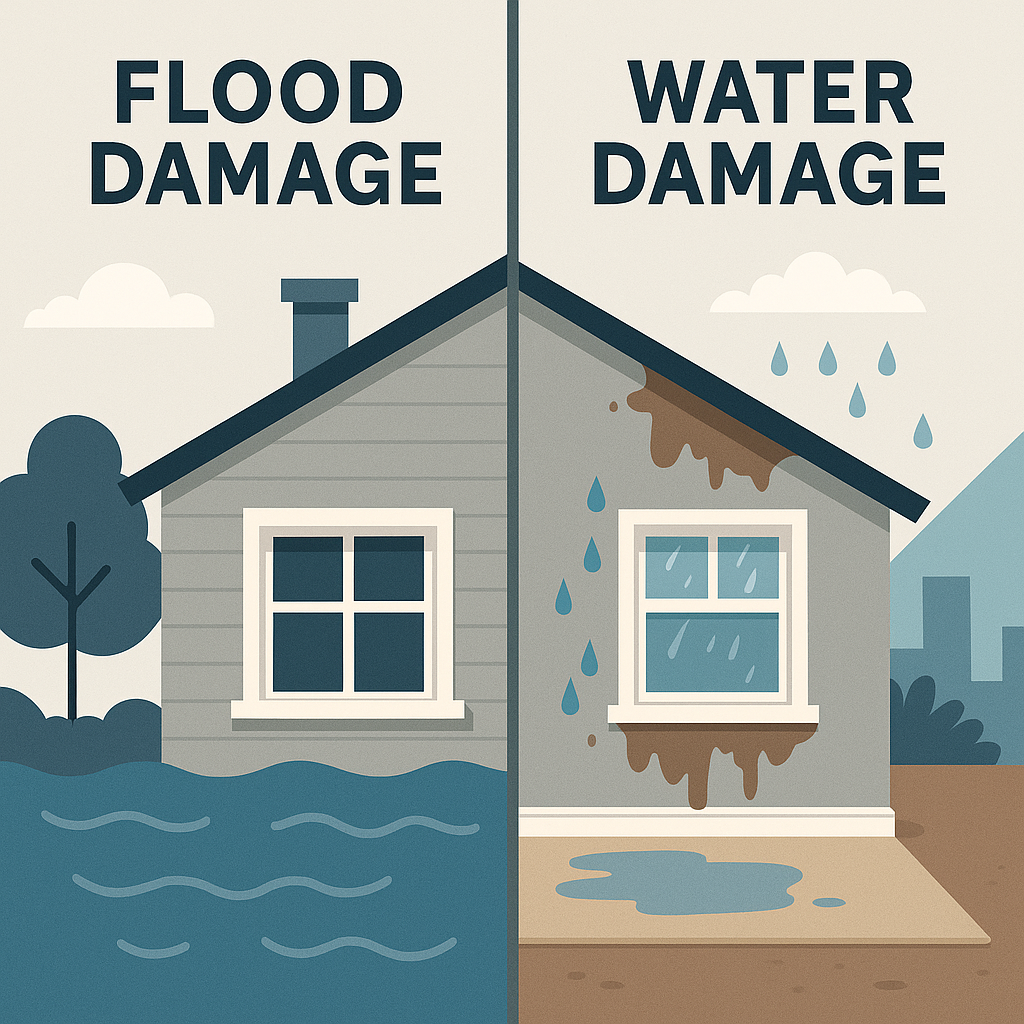
When water gets into your property, the first question most people ask is how bad it is. But for your insurance claim, an equally important question is where the water came from. The source of the water is what determines how a loss is classified, and that classification shapes how the claim is handled. Understanding the difference between water damage and flood damage before something goes wrong puts you in a far stronger position if it does.
What Counts as Water Damage
Water damage generally refers to water that originates inside the building or from a system that serves it: a burst or frozen pipe, a failed water heater or appliance hose, an overflowing tub, an HVAC condensation line, or a roof leak that lets rain in. The defining trait is that the water comes from within the structure’s own systems or through the building envelope, not from rising water outside. When it happens, fast water extraction and drying is what limits the damage.
What Counts as Flood Damage
Flood damage refers to water that enters from outside at ground level; surface water that rises and spreads across normally dry land. Storm surge, an overflowing river, flash flooding, or heavy rain that overwhelms drainage and enters from the outside all fall into this category. The key distinction insurers draw is external, rising water versus internal system failure. Flooding often accompanies severe weather, which is why it frequently overlaps with storm damage restoration.
Why the Distinction Matters So Much
Insurance treats these two categories very differently. Standard property coverage and separate flood coverage are structured around this source distinction, which is why a loss that looks identical on your floor — an inch of water in the basement — can be handled in completely different ways depending on where that water came from. That is also why the cause has to be identified and documented correctly from the very start.
The Gray Areas
Not every situation is clean-cut. Water backup from a sewer or drain, groundwater seeping through a foundation, or a sump pump failure during a storm all sit in between and are often addressed by specific policy provisions rather than the main categories. When a storm is involved, wind-driven rain and rising floodwater can hit the same building at once, making it essential to separate what each source damaged. Our overview of how insurance claims work for property damage explains how that gets sorted out.
How Documentation Changes the Outcome
Because classification hinges on source and sequence, documentation is everything. Photos and moisture readings taken before cleanup, a clear record of when and how the water entered, and a properly written scope give the adjuster what they need to classify the loss accurately. Cleanup that starts before any of that is captured can make an otherwise straightforward claim harder to process. This is one reason a professional water damage assessment is so valuable early on.
Where Insurcomm Fits
This is exactly the kind of situation Insurcomm was built for. We respond 24/7, identify and document the water source from the first visit, and coordinate directly with your carrier and adjuster so the loss is classified and handled accurately. Our insurance documentation and claims support runs through the entire recovery — from mitigation through reconstruction — so you are not left translating between a contractor and an adjuster. One call, one point of contact, and a team that knows how much the source of the water matters.
If water has entered your property and you are not sure how it will be classified, contact Insurcomm or call (888) 728-0353. We will document it and coordinate the claim from there.
Frequently Asked Questions
Is flood damage covered by homeowners insurance?
Coverage depends entirely on your specific policy and how the loss is classified. Flooding from external, rising water and water damage from an internal system failure are typically handled under different types of coverage, which is why identifying the source correctly matters so much. Insurcomm documents the cause so your carrier can make that determination accurately.
What is the main difference between flood and water damage?
The source. Water damage generally comes from inside the building or its systems — a burst pipe, appliance failure, or roof leak — while flood damage comes from external surface water rising and entering from outside.
Why does the source of the water matter for my claim?
Because insurers classify and handle losses based on where the water originated. The same visible damage can be processed very differently depending on whether it was internal water damage or external flooding.
What should I do first if I am not sure which one I have?
Document everything before cleanup and call Insurcomm. Insurcomm responds 24/7, identifies the source, and captures the documentation your claim depends on.