
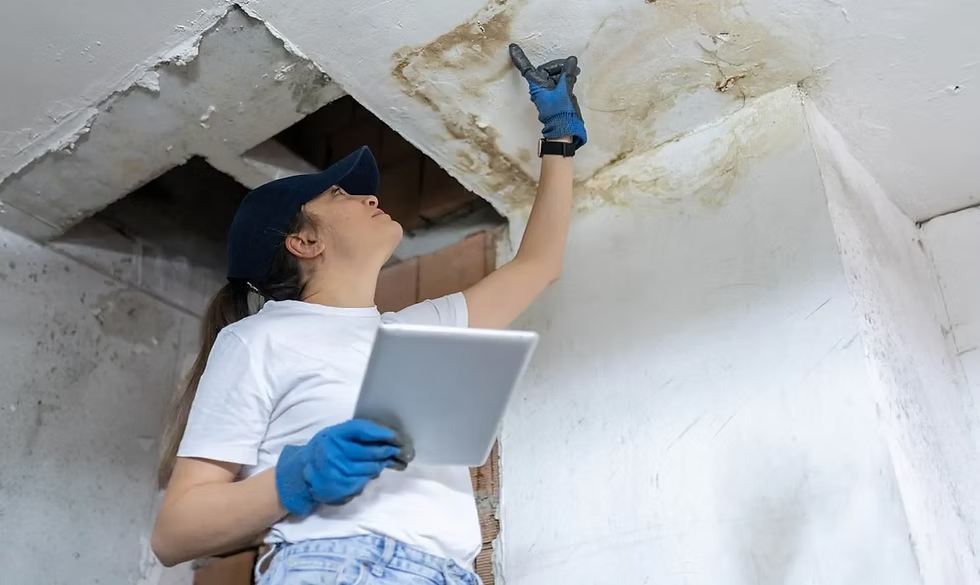
After property damage, your instinct is to start cleaning up, and that instinct, acted on too soon, is one of the most common ways a claim gets complicated. Before anything is moved, dried, or thrown away, the damage needs to be documented. Thorough documentation is what turns your account of what happened into evidence your insurer can act on.
Why Documentation Is the Foundation of a Claim
An insurance claim is only as strong as the record behind it. Adjusters work from evidence, not memory, and the burden of showing what was damaged and how badly falls largely on the policyholder. Good documentation captured early removes ambiguity, speeds the process, and reduces the chance of a re-inspection or a disputed scope later. It is the backbone of how insurance claims work for property damage.
Photos and Video
Start with wide shots that establish each affected room, then move to close-ups of specific damage. Capture the source of the water or the origin of the fire if it is safe to do so. Video walkthroughs with narration add context photos can miss. Timestamp everything, and shoot before any cleanup begins — the ‘before’ state is the part you can never recreate.
Written Inventories
List damaged contents systematically: what the item is, its condition, and any identifying details, noting make and model for higher-value items. This inventory becomes the backbone of the contents portion of your claim, and it is far harder to assemble accurately after items have been moved or discarded — which is why it is a core part of a professional contents packout.
Moisture Readings and Technical Data
This is where professional documentation goes beyond what a homeowner can capture. Moisture meters and thermal imaging reveal water that has spread behind walls, under flooring, and into cavities you cannot see — the hidden damage that drives mold and structural problems weeks later. Documented readings establish the true scope, not just the visible one. Our overview of a professional water damage assessment shows what that looks like.
Scope of Damage Reports
A written scope ties everything together: what was damaged, what caused it, and what the recovery requires. A clear, professional scope is what lets an adjuster classify and process the claim efficiently — and it is the document most likely to prevent disagreements about what the loss actually involved.
Frequently Asked Questions
How should I document property damage for an insurance claim?
Take wide and close-up photos and video before any cleanup, build a written inventory of damaged contents, and preserve evidence of the source. Professional moisture readings and a written scope complete the picture.
Should I clean up before documenting the damage?
No. Cleanup before documentation can remove evidence your claim depends on. Capture the ‘before’ state first, then begin mitigation — or call a restoration team that documents as part of its process.
What documentation can a homeowner not capture on their own?
Hidden moisture behind walls and under floors, which requires moisture meters and thermal imaging, plus a professional scope of damage. These establish the full extent of a loss, not just what is visible.