
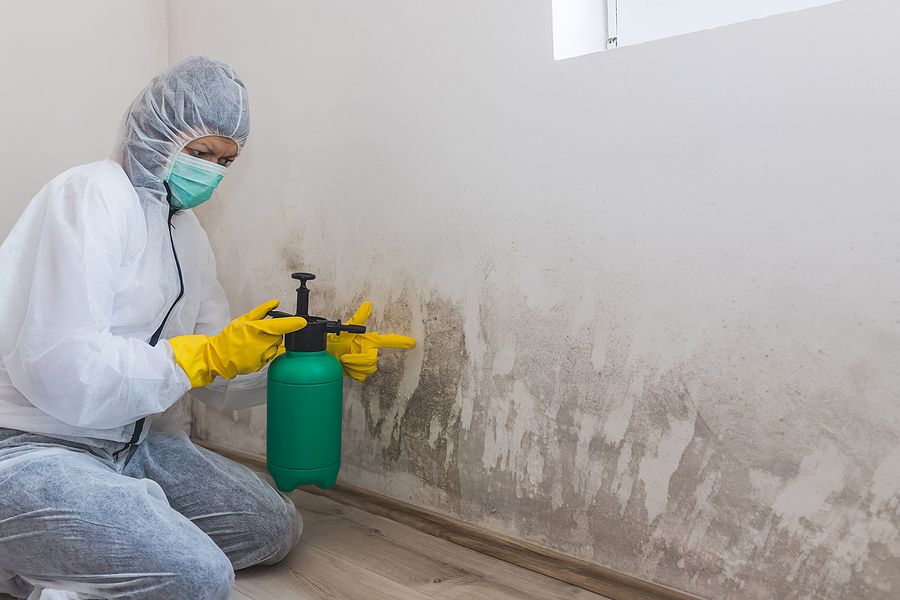
If you’ve found mold, or someone has told you it’s there, you probably have one question: what happens now?
Professional mold remediation follows a set process. Each step has a job to do, and when one gets skipped, the mold usually comes back. Below is how a remediation project runs from the first visit to the final check, so you know what to expect when a crew shows up.
Step 1: Assessment and Testing
The patch you can see is rarely the whole problem. A proper assessment finds where the moisture is coming from, how far the growth has spread (including inside walls and under floors), and what conditions allowed it to start. If the assessment stops at what’s visible, the cause stays in place.
If your water damage is recent, read how fast mold grows after water damage. Acting in the first day or two can keep a drying job from turning into a remediation job.
Step 2: Containment
Before anyone touches the mold, the work area is sealed off with plastic barriers and negative air pressure. Disturbing mold releases spores into the air. Containment keeps those spores inside the work zone so they don’t drift into rooms that were never affected.
Step 3: Air Filtration
HEPA air scrubbers run the whole time the crew is working. They pull spores out of the air as they’re released, which protects the people in the building and the areas outside containment.
Step 4: Removal and Cleaning
Porous materials with heavy growth, like drywall, insulation, and some flooring, usually can’t be cleaned well enough to be saved. They’re cut out and removed. Hard surfaces such as framing, concrete, and metal are cleaned and treated.
Spraying or painting over mold doesn’t solve anything. The growth, and the material it’s living in, has to come out.
Step 5: Fixing the Moisture Source
Mold needs water to grow. If the leak, drainage problem, or condensation behind it is still there, the mold will come back no matter how good the cleanup was. That’s why remediation and water damage repair should be handled by the same team, under the same plan.
Step 6: HVAC Cleaning
Heating and cooling systems can carry spores through an entire building, and mold can grow inside the ductwork itself. If the system has been affected, it gets cleaned and treated so it doesn’t spread the problem again once the rest of the work is done.
Step 7: Post-Remediation Verification
The last step confirms the job worked. The affected areas are inspected and tested when appropriate, before walls are closed up and rebuilt. You should have proof the mold is gone before anything gets covered back up.
Why One Team Should Handle the Whole Job
A mold project can involve assessment, water repair, removal, and rebuilding. When different companies handle different pieces, things fall through the cracks, and those cracks are where mold comes back.
Insurcomm handles mold remediation as part of the full recovery. We fix the moisture source, document the work for your insurance claim, and rebuild what was removed. One team, start to finish.
Dealing with mold? Contact Insurcomm or call (888) 728-0353 to set up an assessment.
Frequently Asked Questions
What are the steps in professional mold remediation?
Professional mold remediation includes assessment and testing, containment, HEPA air filtration, removal and cleaning, fixing the moisture source, HVAC cleaning when needed, and a final verification check before the area is rebuilt.
Why is containment needed during mold removal?
Removing mold releases spores into the air. Plastic barriers and negative air pressure keep those spores inside the work area so they don’t spread to other parts of the building.
Will mold come back if the moisture problem isn’t fixed?
Yes. Mold needs moisture to grow, so if the leak or condensation behind it isn’t repaired, the mold will return. Fixing the water source is part of every proper remediation.
How do I know mold remediation worked?
A post-remediation check, which includes an inspection and testing when appropriate, confirms the affected areas are back to normal before walls are closed up and rebuilt.