
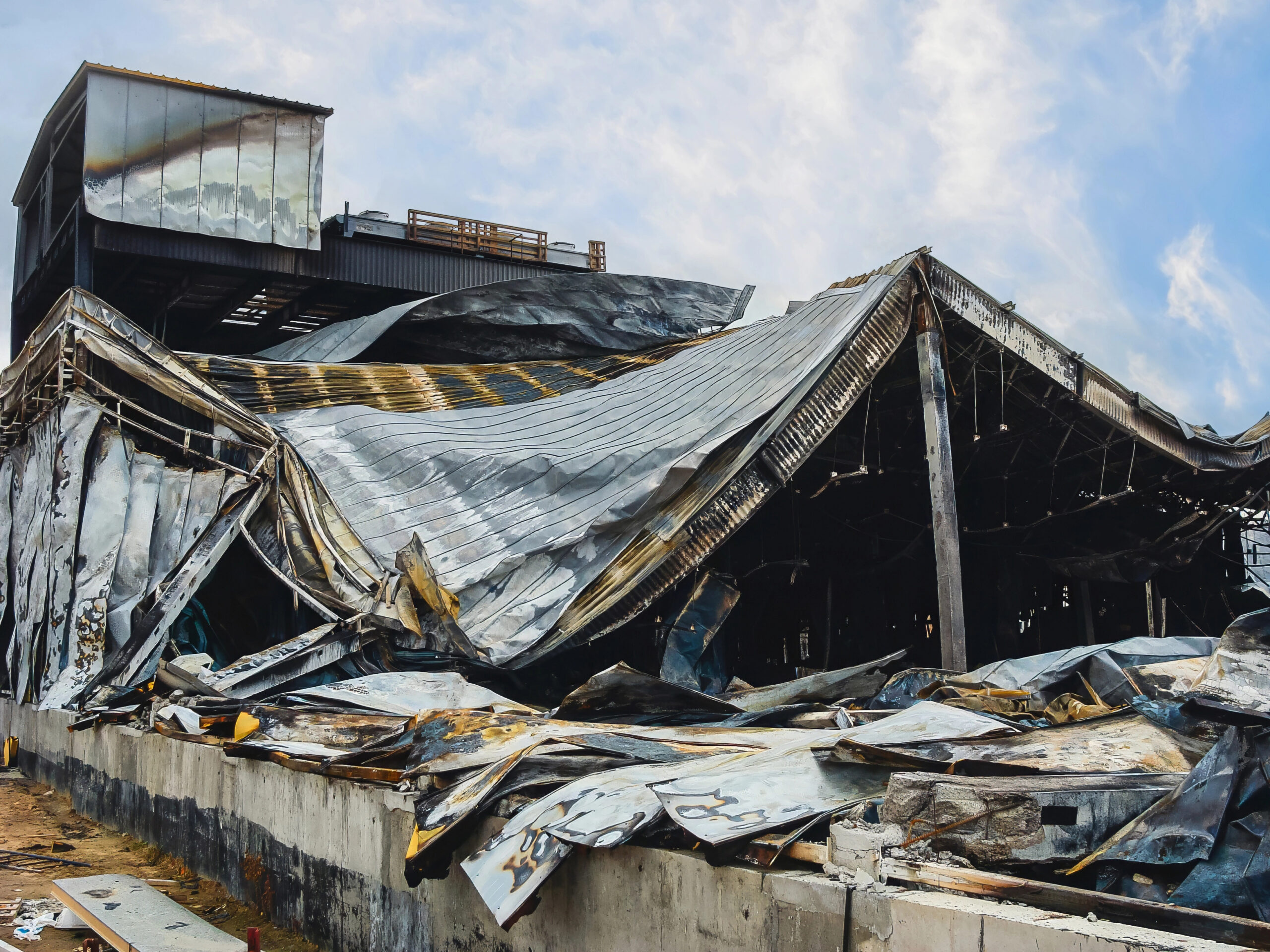
When disaster strikes a commercial property, every hour of downtime has a price. Lost revenue, disrupted operations, strained customer relationships, the costs compound quickly, and they don’t stop until operations resume. What separates businesses that recover in weeks from those that struggle for months usually isn’t luck. It’s preparation, immediate action, and the right restoration partner at the table from day one.
The First 24 Hours Determine Everything
The decisions made in the first day after a commercial disaster shape the entire recovery. Businesses that bounce back fastest aren’t improvising; they have response protocols that activate automatically, eliminating the costly delays that come from figuring out next steps under pressure.
Secure the scene and assess safety.
Evacuate personnel if necessary, shut off utilities to prevent secondary damage, and establish a secure perimeter. For water damage, locating and stopping the source is the first priority. For fire, structural stability must be confirmed before anyone re-enters.
Activate communication simultaneously, not sequentially.
Notify your insurance carrier, your restoration partner, key employees, and critical suppliers simultaneously. Businesses routinely lose hours — sometimes an entire day — by handling these calls one at a time.
Document everything before anything moves.
Comprehensive photos and videos taken before cleanup begins are the foundation of your insurance claim and help restoration professionals accurately assess the full extent of damage. Capture obvious damage and pay attention to areas where hidden damage is likely: ceilings above affected floors, wall cavities near water intrusion points, and mechanical rooms.
Coordinating with Commercial Insurers for Faster Claims
Commercial insurance claims move faster when businesses provide complete, organized information upfront and have a restoration partner actively coordinating with the adjuster, not just waiting to be told what to do.
Most commercial policies require notification within 24 to 48 hours. When reporting, provide specific details: what happened, when, estimated affected square footage, and immediate business impact. Ask directly about coverage for business interruption, temporary relocation, and expedited service provisions — these are often available but not automatically offered.
Large loss events require specialized knowledge. The documentation requirements, coverage structures, and adjuster coordination involved in significant commercial claims are categorically different from residential work. Insurcomm’s large loss teams work directly with commercial carriers and have established protocols for complex claims involving multiple coverage types — business personal property, building coverage, business interruption, and contents — ensuring nothing falls through the gaps between policy provisions.
Protecting Contents and Business Assets
Commercial properties contain equipment, inventory, technology, and records that require immediate attention. A server room exposed to water, a warehouse full of smoke-affected inventory, or a file room with water-damaged documents. Each situation requires a different response, and all of them are time-sensitive.
Professional pack-out services quickly relocate salvageable assets to secure, climate-controlled facilities while restoration proceeds. Every item is documented with photos, serial numbers, and condition assessments, creating the inventory record your insurance claim requires and preventing further loss or damage during the restoration process.
Smoke and water affect items throughout a facility, including areas that appear undamaged. Contents cleaning removes odors, residues, and contaminants that cause long-term damage and — in occupied commercial spaces — ongoing health concerns for employees and customers.
Working Around Active Operations
A complete shutdown is often unnecessary and almost never preferable. The best commercial restoration partners build their workflow around your operations rather than asking operations to stop for theirs.
This means phased restoration; working through sections of your facility systematically so other areas remain functional. It means scheduling disruptive work during off-hours. It means clear communication about what’s being done, where, and when, so your team can plan around it.
Many businesses maintain partial customer-facing operations throughout restoration. The key is transparency and keeping customers and stakeholders informed about timelines and alternative arrangements. Handled well, a restoration period can actually demonstrate organizational resilience rather than undermine confidence.
For Property Managers and Building Owners
Multi-tenant commercial properties carry additional complexity. When a disaster affects a building with multiple tenants, property managers are simultaneously coordinating with their own insurance carrier, managing communications across multiple tenants with different carriers and different needs, and maintaining access and safety for unaffected occupants.
Building systems — HVAC, elevators, fire suppression, electrical — often require specialized restoration or replacement after significant events, and they typically need to meet updated safety codes before the building can reopen. Working with a restoration team experienced in commercial building systems ensures these requirements are identified early and don’t become bottlenecks late in the process.
Common area restoration — lobbies, corridors, and parking structures — requires particular care to maintain the building’s appearance and ensure tenant access continues throughout the recovery period.
What Comprehensive Large Loss Restoration Actually Looks Like
Insurcomm was built on a straightforward principle: restoration companies shouldn’t hand clients off after initial cleanup and leave them to manage reconstruction, insurance coordination, and contractor scheduling on their own. Commercial clients, in particular, need a single point of accountability throughout the entire recovery.
Insurcomm’s large loss capability covers the complete commercial recovery process, including emergency response, contents management, structural drying, full reconstruction, and insurance coordination under one roof. That means one team managing the scope, one point of contact for the carrier, and no gaps between phases where work stalls or responsibility gets unclear.
For businesses facing significant property damage, that continuity isn’t a convenience. It’s often the single biggest factor in how quickly full operations resume.
When everything goes wrong, Insurcomm’s team is dedicated to making sure everything goes right — from the first call through the final walkthrough.
Your Complete Commercial Recovery Solution
Minimizing downtime after commercial property damage requires immediate action, disciplined documentation, and a restoration partner who understands that your goal isn’t just to restore the building but to keep your business functioning.
Insurcomm’s 24/7 emergency response and large loss capabilities are available when you need them. Call (800) 503-9533 for immediate assistance and complete commercial restoration services built around your operational continuity from day one.