
When disaster strikes your property, understanding how insurance claims work for property damage becomes your lifeline to recovery. Whether you’re facing water damage from a burst pipe, fire damage from an electrical fault, or storm damage from severe weather, navigating the insurance claim process while coordinating restoration services can feel overwhelming. The key to a successful recovery lies in understanding how restoration companies work with insurance claims to streamline your path from damage to restoration.
This guide walks through each step of the property damage insurance claim process, revealing how professional restoration companies like Insurcomm handle insurance coordination to protect your interests and accelerate your recovery. For more tailored guidance, please reach out to your insurance provider and one of our team members for more information.
Understanding Property Damage Insurance Claims
Property damage insurance claims follow a structured process designed to assess, document, and restore your property to its pre-loss condition. The insurance company evaluates your claim based on policy coverage, damage extent, and repair costs. However, the complexity of this process often leaves property owners struggling to coordinate between adjusters, contractors, and restoration teams.
Most property owners don’t realize that how a restoration company manages your insurance claim can dramatically impact both your coverage approval and final settlement amount. Professional restoration companies experienced in insurance workflows understand exactly what documentation adjusters need and how to present damage assessments that align with insurance requirements.
Step 1: Immediate Response and Initial Contact
Contact Your Insurance Company The moment you discover property damage, contact your insurance carrier immediately. Most policies require prompt notification, typically within 24-48 hours. When reporting your claim, provide clear details about what happened, when it occurred, and the visible extent of damage.
During this initial call, ask specific questions about your coverage limits, deductible amounts, and what emergency mitigation measures your policy covers. Understanding these details upfront prevents complications later in the restoration process.
Simultaneously, contact a restoration company that specializes in insurance claim coordination. Insurcomm Restoration exemplifies this approach—when Neil Robbins founded the company after witnessing how other restoration companies abandoned customers after initial cleanup, he built Insurcomm specifically to manage the complete insurance claim process from start to finish.
Step 2: Professional Damage Assessment and Documentation
Insurance Company Assignment Once you file your claim, the insurance company assigns an adjuster to evaluate your damage. This adjuster determines what damage is covered under your policy and estimates repair costs.
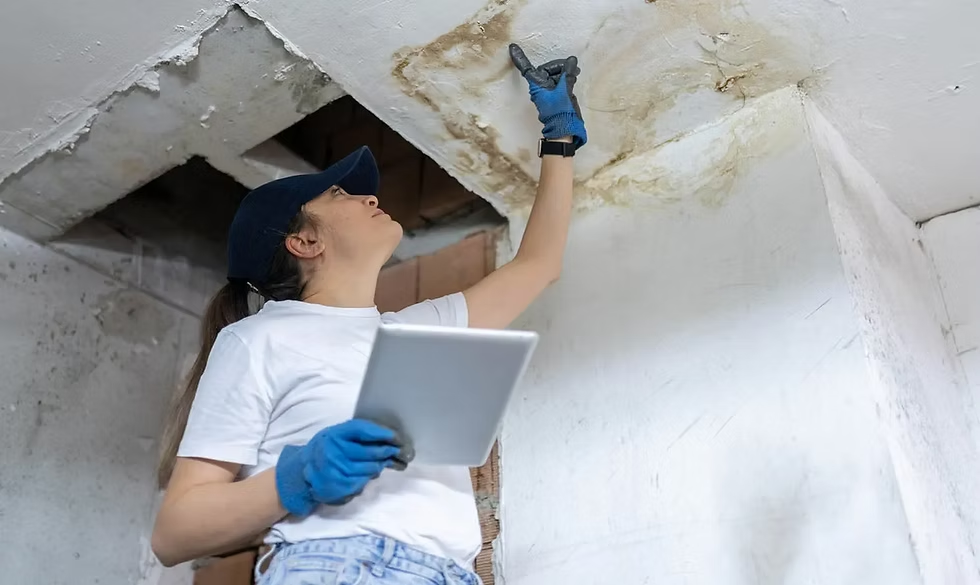
However, having your own restoration company present during this assessment proves crucial. Professional restoration companies bring specialized equipment, such as thermal imaging cameras and moisture meters, which identify hidden damage adjusters might miss. This comprehensive documentation often reveals additional covered damage that increases your settlement.
Insurcomm’s approach during this phase includes detailed photo documentation, moisture mapping, and written assessments that complement the adjuster’s evaluation. This dual documentation protects property owners by ensuring no covered damage goes unnoticed.
Step 3: Mitigation and Emergency Services
Preventing Further Damage Your insurance policy typically covers reasonable costs to prevent additional damage. This includes emergency board-up services, water extraction, structural drying, and temporary weatherproofing.
Professional restoration companies coordinate these emergency services while maintaining detailed records for your insurance claim. Every mitigation step must be documented and approved to ensure reimbursement.
During this critical phase, Insurcomm manages both the emergency response and insurance communication. Their team provides real-time updates to adjusters while executing emergency services, eliminating the coordination burden from property owners during an already stressful time.
Step 4: Detailed Scope Development and Estimates
Creating the Repair Scope After initial assessment, restoration companies develop detailed repair scopes that outline all necessary work. These scopes become the foundation for insurance settlements, making accuracy and completeness essential.
Experienced restoration companies understand insurance terminology and estimation software, ensuring their scopes align with how insurance companies calculate settlements. They know which repairs fall under covered perils and how to present estimates that maximize legitimate claim value.
Insurcomm’s estimation process includes line-by-line breakdowns that match insurance company formats, detailed material specifications, and clear explanations of why each repair is necessary. This thoroughness reduces claim disputes and accelerates approval timelines.
Step 5: Insurance Communication and Advocacy
Managing Adjuster Relations Throughout the claim process, restoration companies serve as your advocate with insurance adjusters. They handle technical discussions about repair methods, material specifications, and damage causation that most property owners find overwhelming.
Professional restoration companies maintain ongoing communication with adjusters, providing updates on conditions, additional damage discoveries, and repair progress. This consistent communication builds trust and ensures smooth claim processing.
When disputes arise, experienced restoration companies provide technical expertise and documentation to support your claim. They understand insurance policy language and can present arguments that align with coverage provisions.
Working with Restoration Companies on Insurance Claims
Choosing the Right Partner Not all restoration companies offer comprehensive insurance claim management like Insurcomm. When selecting a restoration company, verify their experience with insurance claims, certification levels, and willingness to coordinate directly with your adjuster.
The best restoration companies handle all insurance communication, provide detailed documentation, and manage the complete restoration process while keeping you informed throughout. This full-service approach eliminates the stress of coordinating between multiple parties while ensuring your claim receives proper attention.
Insurcomm’s founding principle centers on this comprehensive approach. Rather than cleaning up and walking away like traditional restoration companies, Insurcomm manages every aspect of your insurance claim and restoration from initial emergency response through final reconstruction and claim settlement. When everything goes wrong, their team ensures everything goes right by managing the complete process from emergency response through final settlement.