
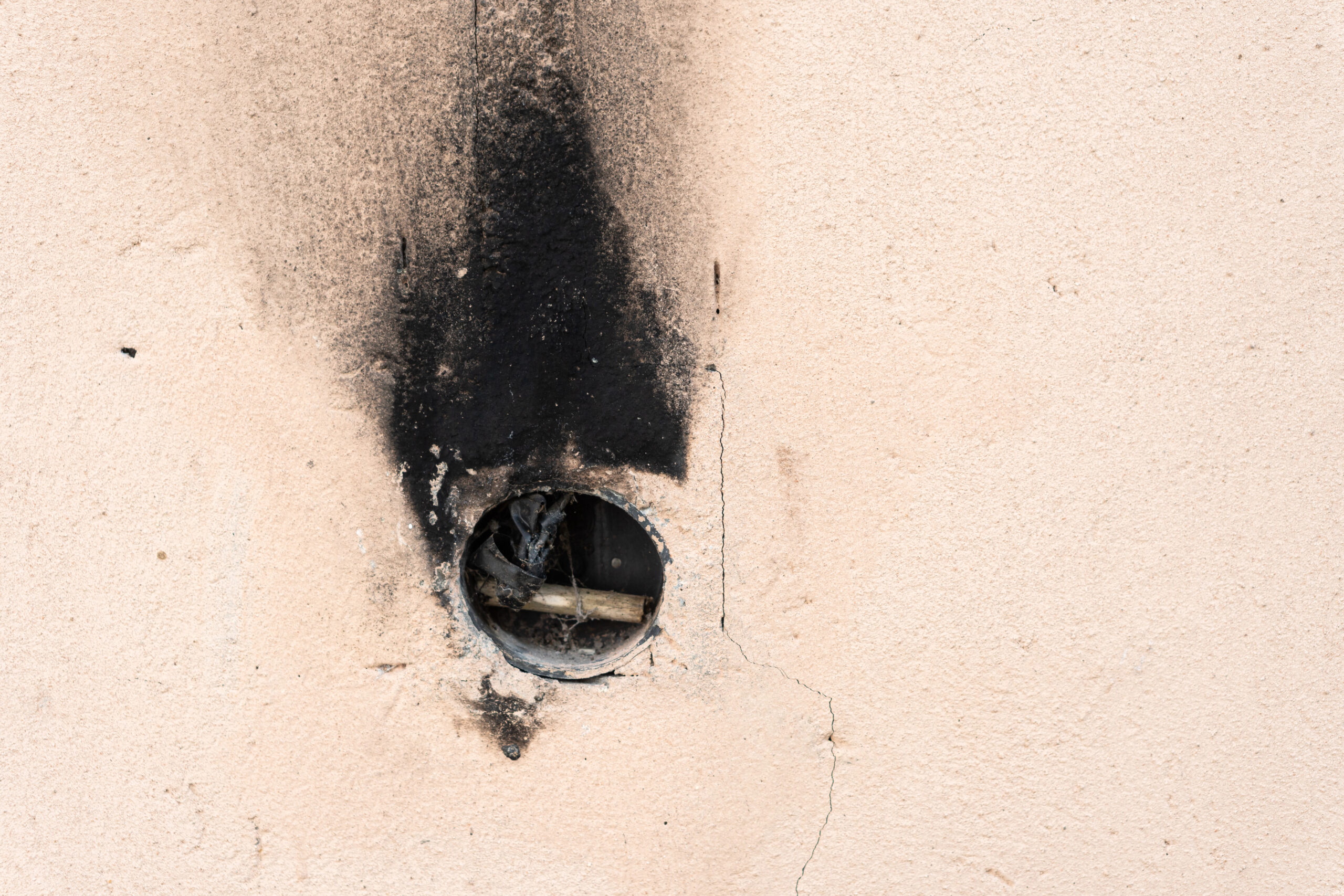
Smoke and odor damage penetrate far deeper than what meets the eye. When fire strikes a property, the visible flames represent only part of the destruction. Invisible smoke particles infiltrate every porous surface, embedding themselves into building materials, furnishings, and air systems. Without the right treatment, those odors and contaminants don’t fade. They linger for years.
Understanding why smoke behaves this way explains why professional restoration requires far more than a surface clean, and why the right partner makes all the difference.
Understanding the Science of Smoke Damage
Smoke damage occurs when microscopic particles and chemical compounds from combustion embed themselves into building materials, furnishings, and HVAC systems. These particles measure less than 0.3 microns in diameter — roughly 300 times smaller than the width of a human hair — allowing them to penetrate deeply into porous materials where ordinary cleaning methods cannot reach.
The composition of smoke varies based on what is burned. Synthetic materials such as plastics, carpeting, and upholstered furniture release toxic chemical compounds that bond to surfaces at the molecular level. Natural materials produce different particle types, but all smoke contains carbon compounds that cling to any available surface.
Temperature differences during and after a fire make the problem worse. Hot smoke expands and pushes into cracks, crevices, and porous surfaces. As temperatures cool, a vacuum effect pulls contaminated air even deeper into building systems, including places no surface cleaning will ever reach.
Why Does Smoke Smell Linger After a Fire?
The persistence of smoke odor comes down to chemistry. Unlike surface dirt, smoke particles form chemical bonds with the materials they contact. Those bonds continuously release odor molecules, which is why the smell returns even after a room appears clean.
Wet smoke, produced by low-temperature fires and burning synthetic materials, creates particularly stubborn problems. It leaves sticky residues that smear when cleaned improperly, spreading contamination to previously unaffected areas.
Protein smoke from burned organic materials penetrates deeply and discolors surfaces without leaving obvious residue, making it easy to underestimate. Fuel oil smoke creates thick, penetrating odors that standard cleaning products cannot neutralize. Each type requires a specific treatment approach.
How Smoke Gets Into Everything
Drywall and Structural Materials
Smoke particles penetrate the paper facing and gypsum core of drywall, traveling through microscopic pores in the material. Paint and primer provide minimal protection against smoke infiltration. Odors persist beneath surface cleaning efforts and beneath fresh coats of paint applied without proper preparation.
HVAC Systems
Air handling systems distribute smoke particles throughout entire properties during and after fires. Ductwork, filters, and mechanical components become contaminated, continuously reintroducing odors every time the system runs. The geometry of HVAC systems makes thorough cleaning nearly impossible without specialized access and equipment.
Insulation and Structural Cavities
Smoke travels through wall cavities, floor joists, and ceiling spaces, contaminating insulation materials that cannot be effectively cleaned in place. These hidden areas become permanent odor sources unless directly addressed during restoration.
Electronics and Appliances
Circuit boards, wiring, and internal components attract smoke particles due to static charge and temperature variation. Beyond the odor problem, these particles cause corrosion and operational failures over time; damage that may not be apparent immediately but worsens if left untreated.
Why Surface Cleaning Doesn’t Work
Standard cleaning products cannot break the molecular bonds between smoke particles and building surfaces. Soap and water may remove surface residue while leaving embedded contamination completely untouched. Many cleaning attempts worsen the problem by spreading wet smoke residue or driving particles deeper into materials.
Paint applied over smoke-damaged surfaces without proper preparation typically fails within months as odor molecules migrate through the new coating. Even specialty primers require thorough surface preparation to hold.
The porous nature of common building materials means contamination extends well beyond what’s visible. Cleaning only what you can see leaves significant odor sources untreated and leaves health hazards in place.
The Solution the Science Demands: Off-Site Cleaning and Deodorization
True smoke damage restoration doesn’t just treat the structure; it addresses every contaminated item within it. That’s where off-site cleaning becomes essential.
Insurcomm’s off-site cleaning and deodorization capability allows furniture, electronics, artwork, clothing, and personal belongings to be processed in a controlled environment using techniques that simply aren’t available on-site. Ultrasonic cleaning reaches contaminants embedded in electronics and delicate items. Thermal fogging generates particles that match the size and behavior of smoke, allowing deodorizing agents to penetrate the same locations as the original contamination. Hydroxyl generators break down odor molecules at the molecular level. Freeze-drying preserves documents and materials that would otherwise be lost.
This matters because items left in a smoke-affected space continue absorbing contamination during restoration. Removing them early — and treating them properly — is often the difference between restoring a belonging and replacing it.
For the structure itself, Insurcomm’s restoration teams use dry ice blasting on delicate surfaces, ozone treatments for embedded contaminants, and full HVAC decontamination to ensure odors aren’t simply masked but eliminated at their source.
A Note for Insurance Professionals
Incomplete smoke damage treatment is one of the most common drivers of callbacks, supplemental claims, and policyholder dissatisfaction. The reason is almost always the same: visible damage was addressed, but contamination in HVAC systems, wall cavities, and contents was not.
Insurcomm coordinates directly with insurance carriers throughout the restoration process, providing detailed scope documentation, moisture and contamination readings, equipment logs, and completion verification. This level of documentation supports accurate coverage determinations and gives adjusters a clear, defensible record from assessment through sign-off.
When everything goes wrong, every member of the Insurcomm team is dedicated to making sure everything goes right for the policyholder and for the professionals managing their claim.
Your Path to Complete Recovery
Smoke and odor damage require more than cleaning. It requires understanding where contamination has traveled, what it has bonded to, and what it will take to eliminate it completely. Surface treatments won’t get you there.
Insurcomm combines advanced structural restoration with comprehensive off-site cleaning to address every aspect of fire and smoke damage recovery, from the walls and ductwork to the furniture and family photos. When you’re ready to stop managing the smell and start actually eliminating it, contact Insurcomm at (800) 503-9533 for a professional assessment.