
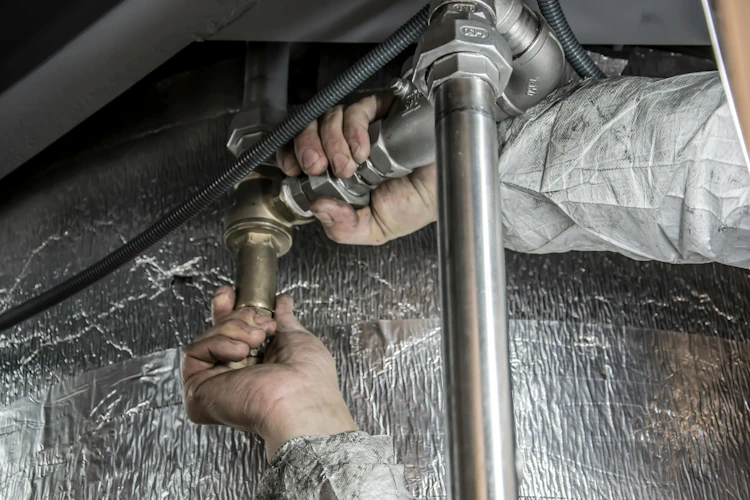
A burst pipe can do a lot of damage in very little time. Supply lines are under pressure, so water keeps flowing until someone shuts it off. In a few minutes, it can soak a floor, fill a ceiling, and start dripping into the rooms below.
Frozen pipes often don’t leak while they’re still frozen. The ice blocks the line, pressure builds between the ice and the closed faucet, and the pipe splits. Then nothing happens until the ice melts and the water has an open path. That’s why so many people discover a burst pipe on the first warm day after a cold snap.
The steps you take in the first hour make a big difference in how much of your home is affected. Work through them in this order.
Step 1: Shut Off the Water
Before anything else, stop the water. Go to the main shutoff valve and close it. If it’s a round wheel, turn it clockwise. If it’s a lever, turn the handle so it sits across the pipe.
The main shutoff is usually where the water line comes into the building. Check the basement wall closest to the street, the crawl space, a utility room, or the area near your water heater. Some towns also have an outdoor shutoff near the street that needs a special key. If you don’t know where your shutoff is, go find it today. It’s the most useful thing to know in a plumbing emergency.
If the break is on a line with its own valve, like under a sink or behind a toilet, closing that valve will stop the flow. Shut off the main anyway until the pipe is fixed.
Step 2: Make Sure It’s Safe
Water and electricity don’t mix. If water is near outlets, appliances, or your electrical panel, or you’d have to stand in water to reach the breaker, don’t do it. Call your utility company or an electrician.
Look up, too. A ceiling that’s bulging or sagging from trapped water can come down without warning. Keep people and pets out of the room below and let professionals handle it.
Step 3: Drain the Lines
With the main off, open the cold-water faucets around the house and flush the toilets. This drains the water left in the pipes and takes pressure off the broken section.
Turn off your water heater using the manufacturer’s instructions. For an electric heater, that usually means switching off the breaker. For gas, it means setting it to pilot or vacation mode. Running a water heater with little or no water in it can damage it.
Step 4: Look for Other Frozen Pipes
If one pipe froze, others may have too, especially in crawl spaces, garages, attics, outside walls, and sink cabinets on exterior walls. Look for frost on the pipes, bulges, or faucets that barely run.
You can thaw a frozen pipe slowly with a hair dryer, or with a space heater set a safe distance away and watched the whole time. Never use an open flame or a torch. It’s a fire hazard and can damage the pipe. If you can’t find or reach the frozen section, call a plumber.
Step 5: Take Pictures Before You Clean
Before you mop, move furniture, or throw anything out, take photos and video of everything. Get the broken pipe, the path the water took, any standing water, stained ceilings, and damaged belongings.
Once the broken piece of pipe is removed, keep it. Your adjuster or plumber may want to look at it, because what caused the break matters. Our guide on how proper documentation protects your insurance claim explains what to capture.
Step 6: Start Professional Drying Within 24 to 48 Hours
Mopping up the water you can see is only the start. Water from a burst pipe soaks up into drywall and spreads into subfloors, insulation, and wall cavities. Something can look dry on the surface and still be wet underneath.
The water itself also changes over time. Under IICRC standards, water from a clean supply line starts out as Category 1, or clean water. The longer it sits in building materials, the more contaminated it becomes, and the more removal and cleaning it takes. Mold can also start growing on wet materials within 24 to 48 hours. Learn more about how fast mold grows after water damage.
Professional water extraction and drying uses moisture meters and thermal cameras to track down where the water went. Then commercial extraction equipment, air movers, and dehumidifiers dry the structure until the readings confirm it’s dry. You can read more about what happens during a professional water damage assessment.
Your Insurance Claim
How a burst pipe claim is handled usually depends on the details. Did the pipe break suddenly, or did it leak slowly over time? What caused it? What condition was the property in? For example, whether an empty home was heated or winterized can come into play. Every policy is different, so your adjuster’s review of the cause and the documentation is a big part of the claim.
Good documentation from the start makes that review easier. With Insurcomm’s insurance documentation and claims support, we record the cause, the moisture readings, and the full scope of damage, and we talk directly with your adjuster so you don’t have to pass messages back and forth. For background, read how insurance claims work for property damage and flood damage vs. water damage.
How to Prevent the Next One
- Insulate pipes in unheated spaces like crawl spaces, garages, attics, and outside walls.
- On the coldest nights, let faucets on outside walls drip and open the cabinet doors under sinks.
- Disconnect garden hoses and drain outdoor spigots before the first freeze.
- Keep the heat on when you’re away, and consider leak sensors or an automatic shutoff valve.
- Leaving a property empty for the season? Follow our guide to winterizing a vacant or seasonal property.
Our fall home maintenance guide covers the rest of your pre-winter checklist.
One Call Covers the Rest
Once the water is off and everyone is safe, call Insurcomm at (888) 728-0353, any time of day or night. We’ll remove the water, dry the structure, document everything for your claim, work with your adjuster, and repair the damage, from drywall and flooring to full reconstruction. One team from the first call to the final walkthrough.
Frequently Asked Questions
What is the first thing to do when a pipe bursts?
Shut off the main water valve right away. It’s usually where the water line enters the building, such as the basement, crawl space, utility room, or near the water heater. Then stay away from electrical hazards and sagging ceilings, and call a restoration company.
Why do frozen pipes burst when they thaw?
Ice blocks the pipe, and pressure builds between the ice and the closed faucet until the pipe splits. The leak usually isn’t noticed until the ice melts and water flows through the break, which is why many burst pipes are found after temperatures warm up.
How long does it take for mold to grow after a pipe bursts?
Mold can start growing on wet materials within 24 to 48 hours. Water from a burst pipe often spreads into walls, subfloors, and insulation where you can’t see it, so professional drying should start as soon as possible.
Can I dry out a burst pipe leak myself?
You can remove standing water you can see, but water that has soaked into drywall, subfloors, and insulation usually needs professional extraction, dehumidification, and moisture monitoring to dry completely and prevent mold.
Should I keep the broken section of pipe?
Yes. Photograph it where it broke and keep it once it’s removed. The cause of the break can matter for your insurance claim, and your adjuster or plumber may want to inspect it.
Does Insurcomm help with the insurance claim for burst pipe damage?
Yes. Insurcomm documents the cause and full scope of the damage, works directly with your adjuster, and handles everything from water removal through final repairs, so you have one point of contact for the whole recovery.