
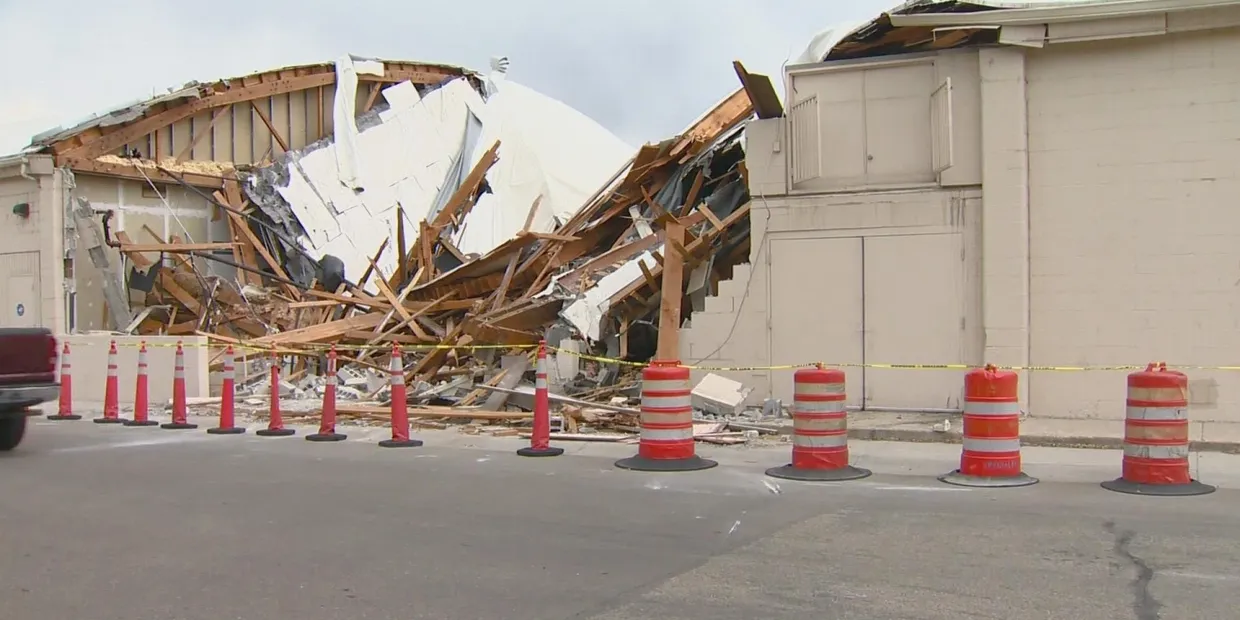
Not all property damage is the same size, and past a certain point it stops being a bigger version of a standard job and becomes a categorically different one. Large loss is the term for that tier, and if you own or manage commercial, industrial, or multi-unit property, understanding what makes it different is the difference between a recovery that stays on track and one that stalls.
What Qualifies as a Large Loss
There is no single square-footage line, but large-loss events share traits: extensive damage across a large or complex structure, high-value or business-critical contents, multiple building systems affected, and a recovery that requires several trades working in coordination over an extended timeline. A flooded high-rise floor, a fire through a manufacturing facility, or storm damage across a hospitality or multi-family property are all large losses.
Why It Is Categorically Different
A standard residential job might involve one crew, one adjuster, and a predictable sequence. A large loss involves many moving parts at once: multiple crews and specialty trades, layered insurance with commercial adjusters and sometimes multiple carriers, extensive documentation requirements, contents and inventory handling at scale, and the constant pressure of business downtime. Complexity, not just size, is what defines it — the same discipline behind commercial and industrial recovery.
The Coordination Problem
The single biggest risk in a large loss is not the damage itself — it is coordination failure. When mitigation, structural work, contents, reconstruction, and insurance are handled by different companies that do not talk to each other, timelines slip, scope falls through the cracks, and the property owner ends up managing a project they never signed up to run. Every handoff is a place for the recovery to stall before it reaches reconstruction.
Downtime Is the Real Cost
For commercial and industrial property, the damage to the building is only part of the loss. Every day out of operation carries its own cost: lost revenue, displaced tenants, disrupted operations. Large-loss recovery has to be run with downtime as a primary constraint, not an afterthought, which means sequencing the work to get critical operations back online as fast as safely possible. Our piece on how businesses minimize downtime after a disaster goes deeper on that discipline.
How Insurcomm Manages Large Loss
Insurcomm was built to manage the full claim from a single point of contact — and at large-loss scale, that model is the entire advantage. We coordinate mitigation, structural stabilization, contents, and reconstruction as one continuous project, document the full scope for your carrier, and work directly with adjusters so nothing falls between the mitigation and rebuild phases. One team owns the recovery end to end, exactly what a large loss requires. You can see how that plays out across our commercial work and case studies.
If you are facing a large or complex property loss, contact Insurcomm or call (888) 728-0353 for immediate large-loss response.
Frequently Asked Questions
What is considered a large loss in restoration?
A large loss is an event where the scale and complexity of the damage require multiple trades, extensive documentation, and extended coordination — typically commercial, industrial, hospitality, or multi-unit properties, though there is no single square-footage threshold.
How is large loss restoration different from standard restoration?
It is defined by coordination complexity, not just size: multiple crews and adjusters, layered insurance, large-scale contents handling, and business-downtime pressure all running at once.
Why does a single point of contact matter in a large loss?
Because coordination failure is the biggest risk. When different companies handle different phases without communicating, timelines slip and scope gets missed. One team owning the full recovery prevents that.
Does Insurcomm handle commercial and industrial large losses?
Yes. Insurcomm’s large-loss and commercial capabilities cover multi-unit, industrial, and hospitality properties, managed end to end from mitigation through reconstruction.